Becoming human
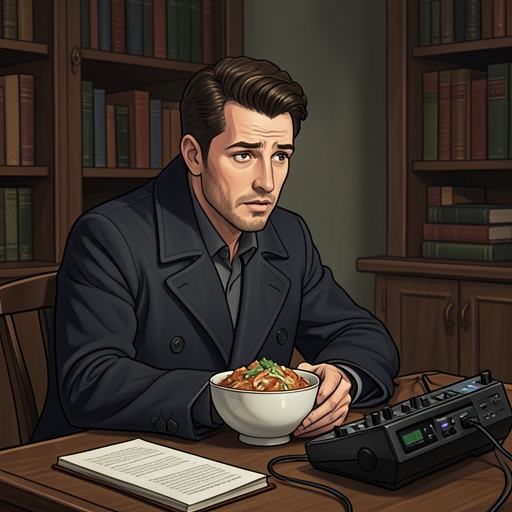
The HumansBecoming human is the central change in the Alien narrator’s story, and it is more than the assumption of a human body. The physical conversion is described as simple; the harder passage is learning to inhabit human relationships and feelings. Through the narrator’s growing response to Isobel Martin, author of the unfinished novel, her son Gulliver, music, and his own vulnerability, the novel makes humanity a practice of connection rather than a mere biological form.
A borrowed identity and an assigned task
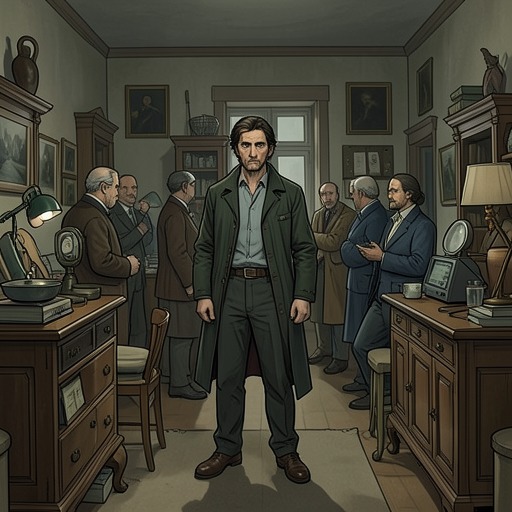
The Alien narrator begins from outside the human world. It insists that it is not Andrew Martin (the alien narrator), but an alien taking on his identity to complete a task begun with Andrew’s abduction and death. The role gives the narrator a human name and a place within a family, but does not immediately give it human attachment. At the outset, Isobel Martin, author of the unfinished novel, and Gulliver are people it is required to treat as irrelevant, not loved ones it recognizes as its own.
The assignment also requires concealment. The narrator is supposed to attract as little attention as possible while carrying out its task, yet recognizes early that it is failing at this basic requirement. The instruction to strive to be normal makes normality sound like a behavioral discipline: the narrator must learn how to pass among humans before it can understand what makes their lives meaningful. Its position is therefore double. It has a human appearance and social role, but measures the world through an alien understanding that regards emotional need as unnecessary.
The body changes before the self
The narrator distinguishes bodily transformation from the more difficult internal change. Its technology can rearrange matter into a human form using the correct commands and model; humans and Vonnadorians are made from roughly the same ingredients. That conversion, in itself, does not produce familiarity. Looking in the mirror, wearing clothes, and encountering the apparent family downstairs are ordinary human circumstances that the narrator must learn to experience as ordinary.
The family scene makes the gap especially clear. Gulliver is identified as the narrator’s son within the borrowed life, yet initially means nothing to it—and, under the mission’s logic, must continue to mean nothing. Isobel Martin, author of the unfinished novel, is likewise designated as a wife who is not truly the narrator’s wife. The narrator can observe her concern for Gulliver, including the way she watches him as a vulnerable child moving out into an uncertain future, before it can fully share the feeling behind that concern. The human role supplies the relationships; emotional recognition does not arrive automatically with it.
Feeling enters through beauty and vulnerability
The narrator’s first responses to human art unsettle its belief that humanity is simply a species of ugliness and violence. Listening to music, it notices how accidents and imperfections can exist inside a pleasing pattern. A cough or other irregular sound becomes part of the evidence that beauty may depend on asymmetry rather than mathematical purity. Music thus offers the narrator a form it can perceive before it can explain the feelings that form awakens.
That response becomes personal. Music brings Isobel Martin, author of the unfinished novel, to mind and recalls her embrace after the narrator told her that Daniel Russell had suffered a fatal heart attack. Her brief suspicion gives way to compassion. The narrator recognizes that she does not believe her husband to be a killer, and the contrast between suspicion and care complicates its effort to keep human beings at a distance. Later, while lying beside her, it becomes aware of her care and of its own fear. In a society that relies on technology for preservation and has no perceived need for emotional dependence, being cared for is unfamiliar; the narrator admits that no one in its universe had cared for it.
Pain, too, becomes part of this change. The narrator fears falling asleep because its injuries will heal, and finds unexpected comfort in their persistence. This does not make pain an easy good: it marks vulnerability and a bodily condition the narrator cannot simply reduce to efficient repair. But the wish to retain that sensation shows that its priorities have shifted. A flaw in the body, and the care received while it remains, can matter in ways that the narrator’s former devotion to mathematical truth cannot account for.
Becoming human as lived recognition
The novel’s central distinction is between becoming physically human and becoming capable of human recognition. The first can be carried out by technology; the second unfolds through particular encounters—with Isobel Martin, author of the unfinished novel, with Gulliver, and with music and pain. Those encounters do not erase the narrator’s origin or immediately settle its identity. They expose the instability of a self that is neither simply Andrew Martin (the alien narrator) nor untouched by the human life it has assumed.
By linking this transformation to love, loss, beauty, and the possibility of harming or saving another person, the novel places becoming human at the center of its inquiry into the meaning of life. Humanity is not presented as a set of ingredients or a disguise that can be put on and considered complete. It takes shape in responses that the narrator’s former emotional independence could not supply: noticing another person’s vulnerability, receiving care, and finding significance in experiences that are imperfect and finite.